
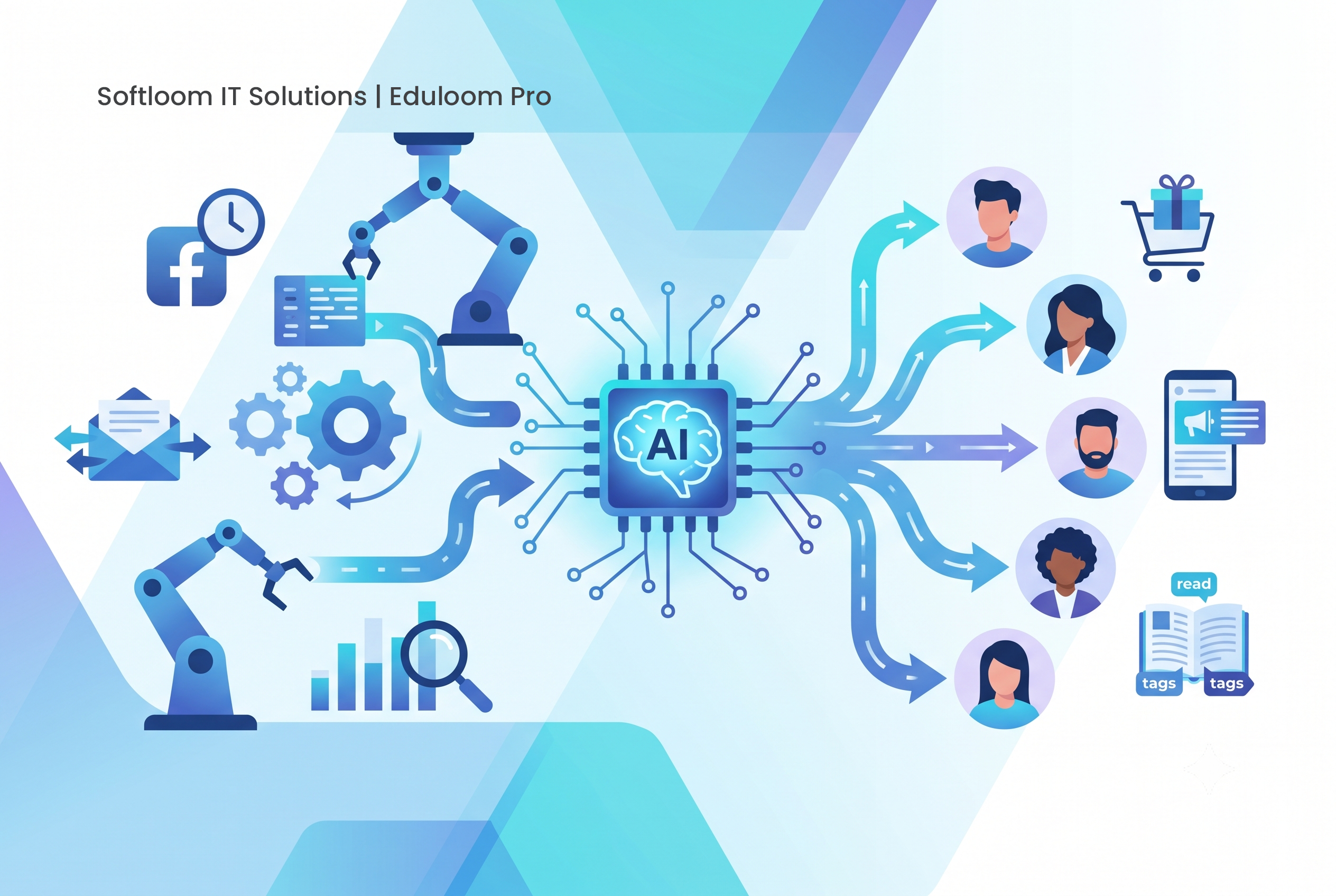
Digital marketing is evolving rapidly, and artificial intelligence is at the center of this transformation. Traditional marketing methods rely heavily on manual analysis and generic campaigns, while AI-powered digital marketing focuses on precision , automation, and real-time decision-making. Businesses that adopt AI-driven strategies gain a competitive edge by delivering more relevant and impactful customer experiences.
The Role of AI in Modern Digital Marketing
AI enhances digital marketing by processing vast amounts of data and identifying patterns that humans cannot easily detect. From customer behavior analysis to campaign optimization and AI tools help marketers make faster and smarter decisions. This shift allows businesses to move first from reactive marketing to proactive and predictive strategies.
Smarter SEO with Artificial Intelligence
AI has transformed SEO from keyword-focused optimization to intent-based optimization. Search engines now prioritize content relevance, user experience, and engagement signals. AI-powered SEO tools assist marketers in
- Identifying search intent
- Improving content structure and readability
- Enhancing technical SEO performance
- Monitoring ranking fluctuations in real time
As a result, websites achieve sustainable search visibility rather than short term rankings finally.
AI-Powered Content Marketing
Content creation has become more strategic with AI. By analyzing trending topics, audience preferences, and content gaps, AI helps marketers make informed decisions. Rather than replacing creativity, AI supports marketers by improving content quality and consistency, thereby increasing overall performance. As a result, this approach ensures that content remains user-focused and search-engine friendly.
Automation and Efficiency Through AI in Marketing
One of AI’s strongest advantages is personalization. AI systems analyze user interactions to deliver customized experiences across digital platforms. Personalized marketing includes tailored website content, targeted emails, also relevant product suggestions. These experiences increase engagement and build long-term customer relationships.
Marketing Automation and Efficiency
AI-driven automation significantly simplifies repetitive marketing tasks and, as a result, improves operational efficiency. For example, automated workflows manage lead nurturing, campaign scheduling, and performance tracking. Because of this, marketing teams can focus more on strategic planning, while at the same time ensuring consistent and timely communication with customers. Overall, this approach leads to more streamlined and effective marketing operations.
Role of AI in Data-Driven Digital Marketing
AI converts complex data into meaningful insights. By analyzing user behavior and conversion paths, and engagement metrics but also AI helps marketers understand what works and what needs improvement. This data-driven approach minimizes guesswork and maximizes return on investment.
Ethical Use of AI and its impact on digital marketing
As AI becomes more integrated into digital marketing, ethical usage becomes increasingly essential. In particular, transparency, data privacy, and responsible automation play a crucial role in maintaining user trust. Moreover, businesses that follow ethical AI practices not only comply with regulations but also strengthen their brand credibility and customer loyalty. Ultimately, ethical AI adoption supports long-term business success.
The Future of Digital Marketing
The future of ai impact on digital marketing will be shaped by intelligent systems, real-time personalization, and continuous optimization. More over AI will continue to support marketers in creating meaningful experiences rather than mass communication. Businesses that adapt early will remain relevant in an increasingly digital-first world.
Conclusion
Overall, AI is redefining digital marketing by making it smarter, faster, and more customer-centric. From SEO and content marketing to personalization and automation, AI-driven strategies, therefore, help businesses achieve measurable growth. In conclusion, embracing AI is not only about replacing marketers but rather about empowering them to deliver more efficient, data-driven, and impactful results. Ultimately, AI enables brands to stay competitive in an evolving digital landscape.
