
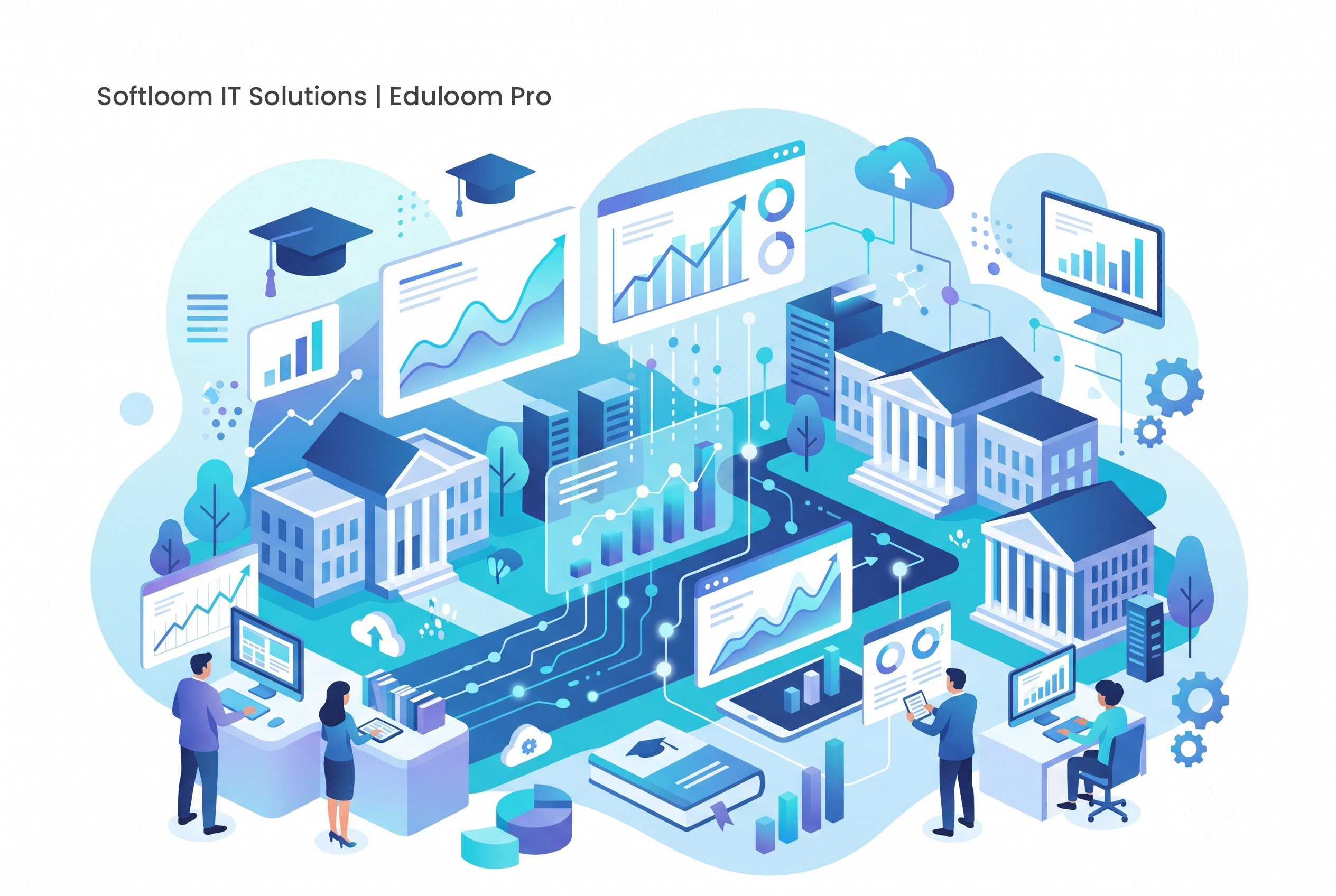
Data-driven decision making is transforming the way colleges operate today. Instead of relying on assumptions or manual reports, institutions are now using real-time data from college management software to guide academic and administrative decisions. When information from admissions, academics, finance, examinations, and attendance is centralized in a single platform, it becomes easier for management to identify trends, measure performance, and take timely action.
Enhancing Academic Planning Through Data Insights
College management software helps institutions analyze subject performance, student results, and course enrollment trends to support better academic planning. Administrators and faculty can quickly see which programs are performing well and which require improvement. This data-driven approach enables curriculum updates, optimized class scheduling, and better resource allocation. Instead of relying on guesswork, colleges base their academic strategies on measurable outcomes and real performance indicators.
Improving Student Success with Early Intervention Analytics
With real-time analytics, institutions can identify students who show declining attendance, low grades, or reduced participation. College management software highlights these risk indicators early, allowing teachers and mentors to provide timely support. Personalized counseling, remedial classes, or parental communication can then be arranged before issues become severe. This proactive, data-backed approach improves retention rates and overall student success.
Streamlining Administrative Operations Through Centralized Data
When data is scattered across files and departments, decision-making becomes slow and inaccurate. College management software centralizes information related to admissions, examinations, attendance, and finance on a single platform. Administrators gain instant visibility into daily operations through dashboards and automated reports. This reduces manual paperwork, minimizes duplication, and improves coordination between departments, resulting in faster and more reliable decisions.
Financial Transparency and Budget Optimization Using Analytics
Data-driven financial analytics provides colleges with a clear picture of revenue, expenses, pending fees, and resource utilization. Management teams can track fee collection trends, control unnecessary spending, and plan budgets more accurately. Insightful financial reports support transparent governance and informed investment decisions in infrastructure, technology, and academic programs. This ensures financial stability while maintaining quality education services.
Supporting Strategic Growth and Accreditation Efforts
Accreditation bodies increasingly expect institutions to demonstrate evidence-based performance. Data Driven College Management simplifies this process by generating accurate reports on student outcomes, faculty activity, research output, and overall institutional performance. Leadership teams can use this data to plan new courses, expand departments, and strengthen institutional ranking. This data-driven approach supports continuous improvement and long-term institutional growth
Building a Culture of Accountability and Transparency
When decisions are supported by clear data, accountability naturally improves. Faculty, students, and administrators can access relevant information according to their roles, encouraging openness and responsibility. Transparent analytics reduce disputes, clarify processes, and support fair evaluation of performance. Over time, this promotes a culture where actions are guided by evidence rather than assumptions.
Data-Driven Decision Making in College Management Software empowers educational institutions to make smarter, faster, and more accurate administrative decisions. By analyzing real-time data related to student performance, attendance, admissions, faculty workload, and financial operations, college management software helps administrators identify trends, predict outcomes, and optimize resources effectively. This data-centric approach improves operational efficiency, enhances academic planning, and supports informed policy decisions, ultimately leading to better institutional growth and student success.
