
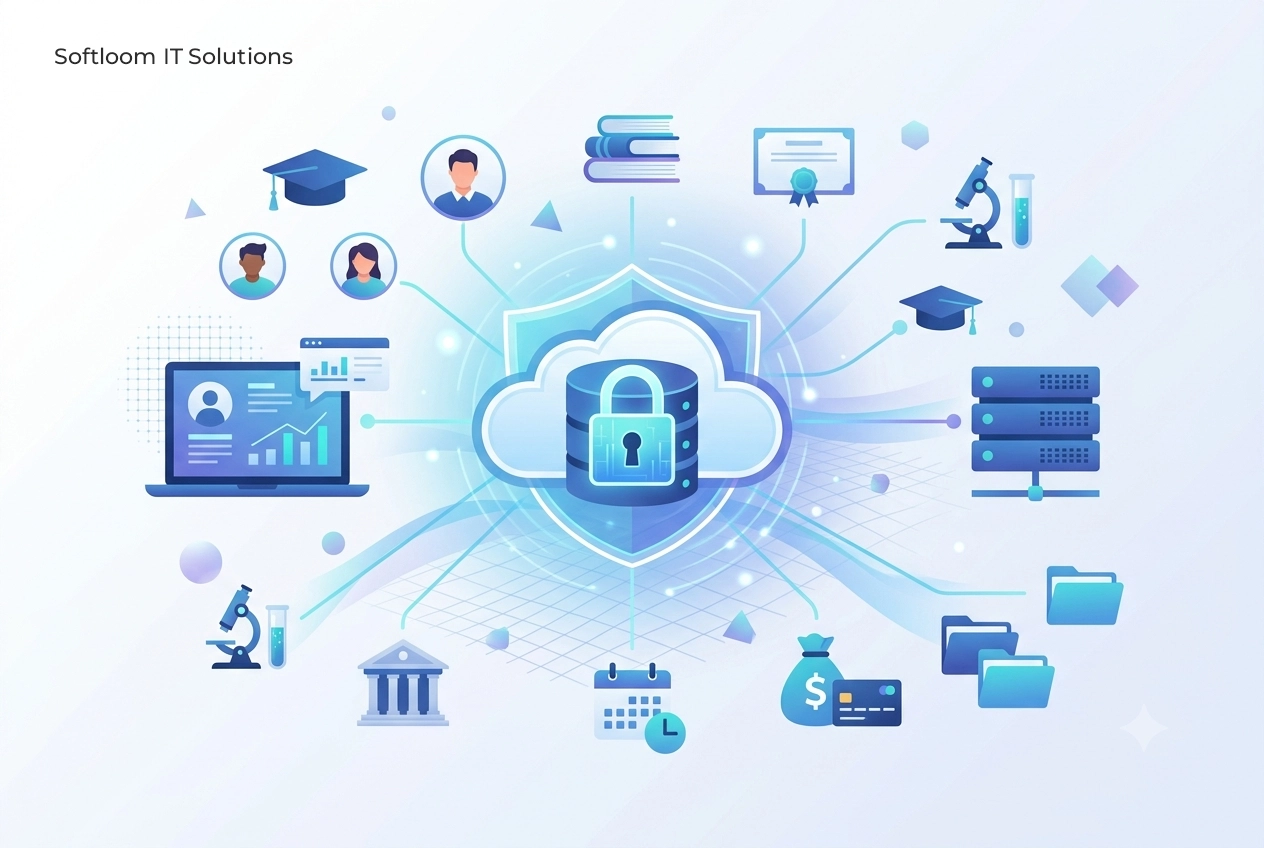
Imagine this: a college administrator opens their email one morning to find that sensitive student records, exam scores, personal details, and even financial data have been leaked online. It’s a nightmare scenario that no institution ever wants to face.
Most colleges are shifting from manual processes to College Management Systems (CMS) to handle everything from admissions and attendance to fee collection and reporting. While these systems offer efficiency and convenience, they also come with one crucial responsibility: data security. Protecting the personal and academic information of students, staff, and the institution itself is no longer optional; it’s an absolute necessity.
Let’s explore why data security is the backbone of a reliable college management system and how it protects the entire academic ecosystem.
1. The Sensitivity of Student and Institutional Data
Colleges manage a wide variety of sensitive data, including:
If this information falls into the wrong hands, it can lead to identity theft, fraud, or reputational damage for the institution. This is why robust security measures are essential in every CMS.
2. Cybersecurity Threats in Education
The education sector has become a frequent target for cybercriminals. Some of the most common threats include:
Without strong data protection, a single security breach can disrupt operations, erode trust, and even lead to legal consequences for the college.
3. Building Trust with Students and Parents
In an era where digital interactions dominate, students and parents expect institutions to handle their data responsibly. A college that prioritizes data security in its management system builds trust by ensuring that:
Trust is a priceless asset in education. A secure system helps colleges strengthen their credibility and reputation.
4. Compliance with Regulations and Legal Standards
Data security isn’t just about ethics; it’s also a matter of compliance. Many countries have strict laws regarding data protection in the education sector. For example:
Colleges that use secure management software ensure they comply with these regulations, avoiding hefty fines and legal challenges.
5. Key Features of a Secure College Management System
So, what makes a CMS secure? Institutions should look for systems that include:
These features not only protect information but also make it easier for institutions to monitor and prevent misuse.
6. The Role of Faculty and Staff in Data Security
Technology alone cannot safeguard college data. Staff and faculty members also play a vital role. With proper training, they can:
By creating a culture of cybersecurity awareness, colleges can minimize the risks of internal errors or negligence.
7. Preparing for the Future of Education
As colleges increasingly adopt online learning platforms, digital libraries, and cloud-based systems, the importance of data security will continue to grow. Investing in a secure CMS is not just about solving today’s challenges; it’s about future-proofing institutions against evolving cyber threats.
In the digital transformation journey of education, data security in college management systems stands as the foundation of trust, reliability, and growth. From protecting student identities to ensuring compliance with regulations, secure systems shield institutions from risks while enhancing their credibility.
Colleges that prioritize data security don’t just protect their records; they protect their reputation, their people, and the future of education itself.
