
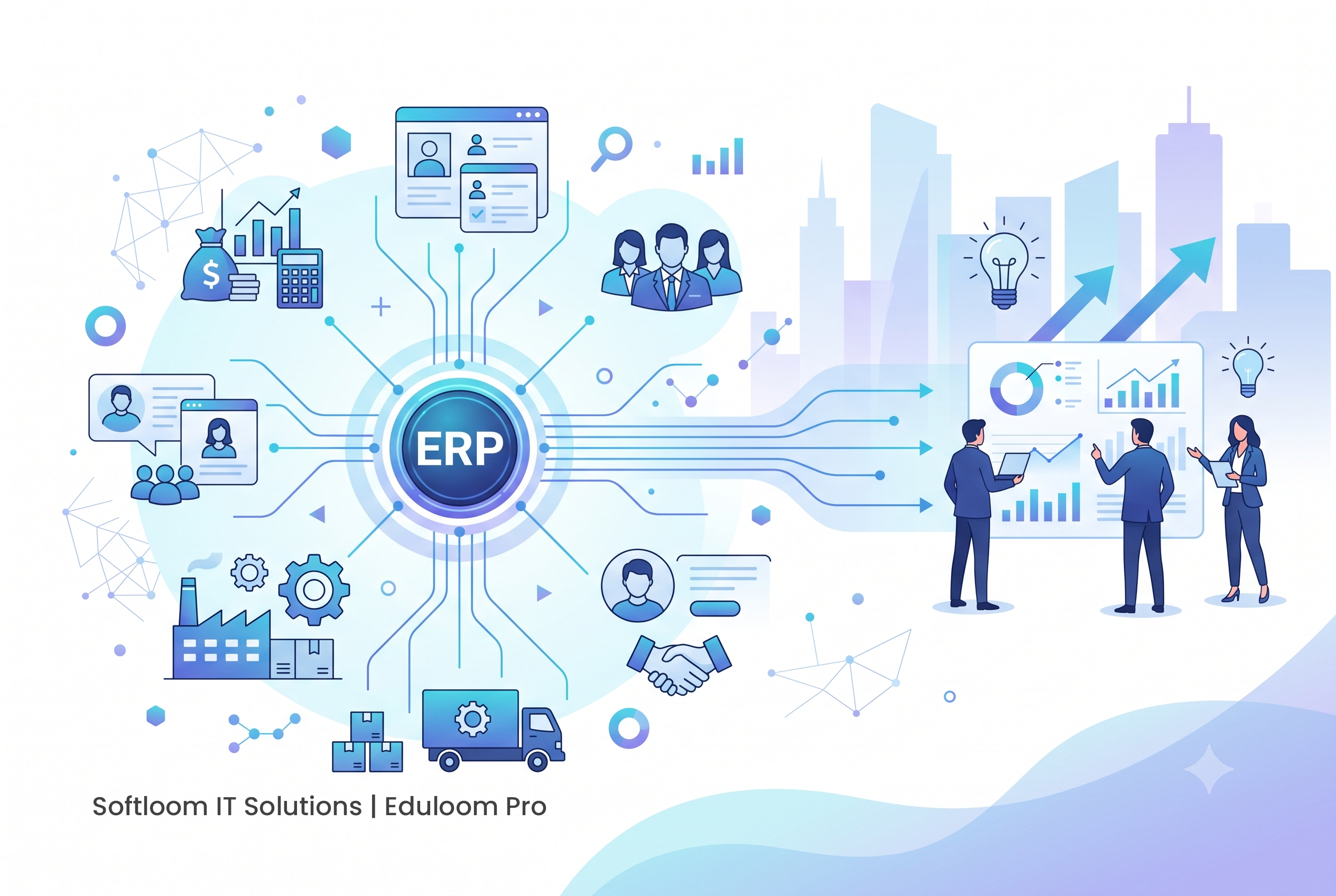
In today’s highly competitive business environment, organizations need quick access to accurate data to make informed decisions. Enterprise Resource Planning (ERP) systems play a crucial role in connecting departments, eliminating data silos, and providing real-time visibility into operations. By integrating core business functions into a single platform, ERP helps businesses improve efficiency, reduce errors, and make smarter decisions faster.
Unified Data for Clear Insights
One of the biggest advantages of ERP is centralized data. Instead of handling scattered spreadsheets or separate software systems, ERP brings finance, HR, sales, inventory, and operations together in a single dashboard. This unified information helps management track performance trends and make data-driven decisions with confidence.
Real-Time Reporting and Analytics
ERP systems offer real-time reporting capabilities that allow organizations to monitor key performance indicators instantly. Customizable dashboards and analytics tools help identify issues early, predict future demand, and highlight opportunities for growth. Decision-makers no longer have to wait for monthly reports they get insights when they need them.
Improved Process Automation
ERP for Business Operations automates routine tasks such as invoice processing, purchase orders, inventory updates, and payroll management. This not only saves time but also allows teams to focus on strategic and revenue-generating activities rather than repetitive administrative work
Enhanced Collaboration Across Departments
An ERP for Business Operations system automates routine tasks such as invoice processing, purchase orders, inventory updates, and payroll management. This not only saves time but also allows teams to focus on strategic and revenue-generating activities rather than repetitive administrative work..
Better Resource Planning and Cost Control
With ERP, companies gain clearer visibility into resource utilization, budgets, and operational expenses. This helps management identify cost leakages, optimize resource allocation, and plan future investments effectively. Accurate forecasting supports better strategic planning and long-term growth.
Strengthening Customer Experience
By integrating CRM capabilities, ERP allows businesses to track customer interactions, order histories, and support requests in one place. This leads to faster response times, personalized service, and improved overall customer satisfaction directly contributing to business growth.
Conclusion
ERP is more than just a software system it is a strategic tool that empowers businesses to operate efficiently and make informed decisions. By offering real-time data, automation, collaboration, and financial control, ERP helps organizations stay competitive and agile in a rapidly evolving market.
