
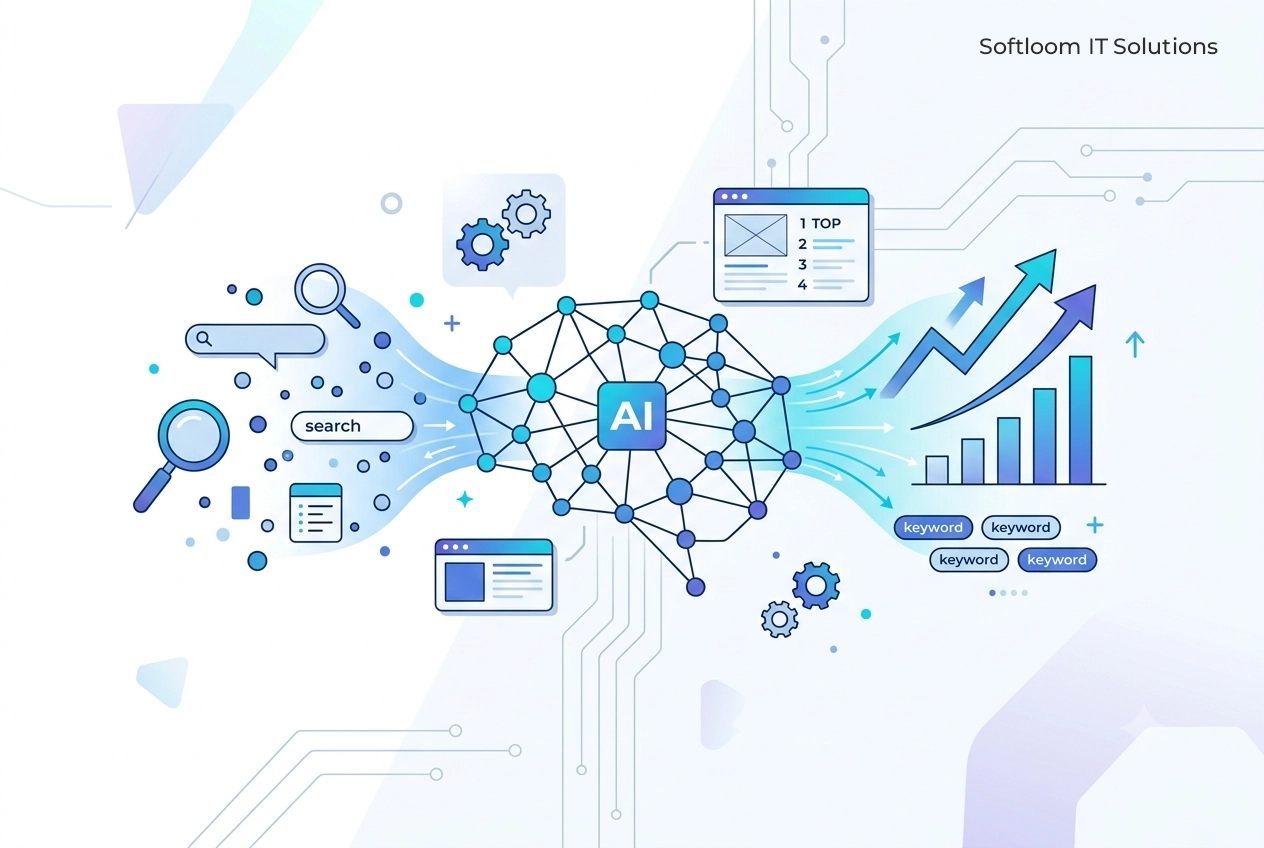
Artificial Intelligence (AI) is transforming the way search engines work and how marketers approach Search Engine Optimisation (SEO). Traditional SEO relied heavily on manual keyword research, backlinks, and basic content optimisation. Today, AI-driven algorithms analyse user behaviour, intent, and context to deliver more accurate and personalised search results. As search engines become smarter, SEO strategies must also evolve.
Understanding AI in SEO
AI in SEO refers to the use of machine learning, natural language processing (NLP), and data analysis to improve search rankings and user experience. Google’s algorithms, such as RankBrain, BERT, and helpful content systems, use AI to understand what users are truly searching for rather than just matching keywords. This means search engines now focus more on relevance, intent, and content quality than ever before.
How AI Is Changing Keyword Research
Keyword research has become more intelligent with AI-powered tools. Instead of focusing only on exact-match keywords, AI helps identify semantic keywords, related phrases, and user intent. Search engines now understand variations and context, allowing content to rank even if it does not repeat the same keyword multiple times. This shift encourages marketers to write naturally and focus on topics rather than keyword stuffing.
AI-Driven Content Optimisation
AI plays a major role in content optimisation by analysing top-ranking pages and suggesting improvements. It helps identify content gaps, improve readability, and align content with search intent. AI tools can suggest better headings, optimise meta descriptions, and recommend internal links. However, while AI assists in optimisation, human creativity and expertise are still essential for creating valuable and trustworthy content.
Impact of AI on Search Engine Algorithms
Search engines now use AI to understand user behaviour, such as click-through rate, dwell time, and bounce rate. This means SEO is no longer just about ranking but also about engagement. Content that provides clear answers, good structure, and a positive user experience performs better. AI rewards websites that focus on quality, relevance, and user satisfaction.
AI in Technical SEO
AI is also changing technical SEO by automating audits and identifying issues quickly. It helps detect crawl errors, page speed problems, mobile usability issues, and broken links. AI-based tools can prioritise fixes based on their impact on rankings, saving time and improving efficiency for SEO professionals.
Role of AI in Voice and Visual Search
With the growth of voice assistants and visual search, AI has expanded SEO beyond text-based queries. Voice search focuses on conversational and question-based keywords, while visual search relies on image recognition. Optimising content for voice and images has become an important part of modern SEO strategies.
Benefits of AI in SEO
AI helps marketers make data-driven decisions, reduce manual work, and improve accuracy. It enhances keyword research, content optimisation, competitor analysis, and performance tracking. By using AI, SEO professionals can focus more on strategy, creativity, and long-term growth instead of repetitive tasks.
Challenges and Limitations
Despite its benefits, AI in SEO has limitations. Over-reliance on automation can lead to generic content and missed opportunities. AI tools provide insights, but they cannot fully replace human understanding, originality, and ethical judgment. Successful SEO requires a balance between AI assistance and human expertise.
The Future of SEO with AI
The future of SEO will be more personalised, intent-driven, and experience-focused. AI will continue to evolve, making search results smarter and more user-centric. SEO professionals who adapt to AI-driven changes, focus on high-quality content, and prioritise user experience will stay ahead in the competitive digital landscape.
Conclusion
AI is not replacing SEO but reshaping it. Search optimisation is moving from keyword-focused tactics to intent-driven strategies powered by artificial intelligence. By embracing AI responsibly and combining it with strong content and ethical SEO practices, businesses can achieve sustainable search visibility and long-term success.
